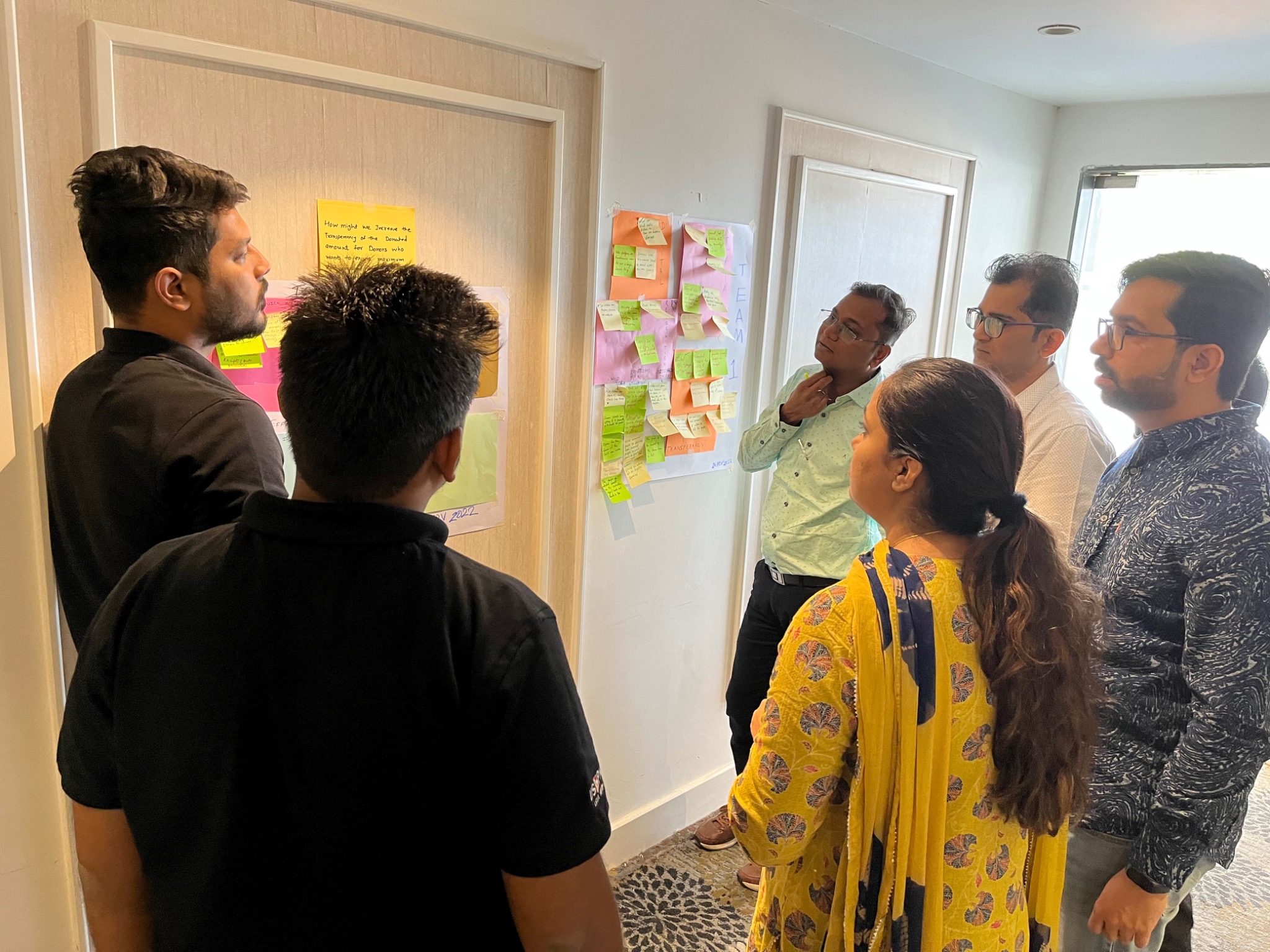
AI use cases are easy to generate. A room of business and technology leaders can produce dozens within an hour. The harder work begins when somebody asks: which of these ideas should receive time, funding and leadership attention?
Technical possibility is not the same as investment worthiness.
An idea may sound impressive, use a fashionable technology and still fail to address a meaningful need. Another may offer genuine value but depend on data, processes or behaviours that are not ready. A third may solve a real problem but introduce risk that the organisation cannot yet manage.
Good AI investment decisions therefore require more than enthusiasm. They require a disciplined way to separate interesting ideas from opportunities worth testing and scaling.
A long use-case list can create false confidence
Many AI discovery exercises end with a catalogue: automated reports, intelligent assistants, predictive models, document summarisation, chatbots, workflow automation and personalised recommendations.
The list shows possibility. It does not create a portfolio.
A portfolio requires choices. Leaders need to know which opportunities are connected to current business priorities, where the expected value is credible, what must be true for the idea to work and what evidence is still missing.
Without these choices, organisations spread attention across too many experiments. Teams remain busy, but few initiatives become trusted, adopted or measurable.
Start by asking whether the problem deserves investment
Before assessing an AI solution, assess the problem.
Is it important enough to solve? Who experiences it? How frequently does it occur? What does it cost in time, quality, customer experience, employee effort, risk or missed opportunity? Is the problem supported by evidence, or mainly by assumption?
A weakly understood problem does not become a strong investment simply because AI is attached to it.
This is where human-centred discovery matters. Conversations with employees, customers, process owners and other stakeholders help leaders see how the work actually happens. They also reveal whether the visible issue is the real problem or only a symptom.
Evaluate the opportunity through six decision lenses
No single score can make an AI investment decision. A useful review considers six connected lenses.
1. Business value
Does the opportunity support a priority that matters now? Could it improve revenue, cost, speed, quality, experience, risk management or decision-making in a meaningful way? The value should be specific enough to discuss and eventually measure.
2. Human usefulness
Will the proposed use case make work or an experience genuinely better for the people involved? Does it reduce effort, improve judgement, remove friction or help someone achieve a valued outcome? If users do not see the benefit, adoption will remain an afterthought.
3. Data and technical feasibility
Is suitable data available, accessible and reliable? Can the solution work within the existing technology environment? What integrations, controls and operating changes are required? A promising idea can still be premature if its foundations are weak.
4. Organisational readiness
Is there a committed business owner? Are process owners and users willing to participate? Can the organisation change roles, workflows, measures or decision rights where necessary? AI adoption is an organisational change, not only a technical installation.
5. Risk and responsible use
What could go wrong? Leaders need to consider privacy, security, bias, explainability, accuracy, regulatory exposure and accountability. The question is not whether all risk can be removed, but whether it is understood and can be managed responsibly.
6. Evidence and testability
Can the most important assumptions be tested before a large commitment? Is it possible to compare the proposed approach with the current process? Opportunities that support fast, meaningful learning are often better early investments than ideas that require full-scale implementation before value can be observed.
High value and high excitement are not the same
Some AI ideas attract attention because they are visible, novel or easy to demonstrate. Their business effect may still be limited.
Other opportunities appear less dramatic but remove persistent friction from a critical workflow, improve the quality of a recurring decision or help teams find reliable information faster. These may generate greater value over time.
Leadership teams need to resist choosing use cases only for their presentation value. The better question is whether the opportunity can create a sustained improvement in an outcome that matters.
Do not confuse a pilot with evidence
Running a pilot does not automatically create learning. A useful experiment begins with explicit assumptions and measures.
What do we believe users will find useful? What improvement do we expect? What quality level is acceptable? Where must human judgement remain? What would make us stop, redesign or proceed?
These questions turn a demonstration into an evidence-building exercise.
The outcome of an experiment is not always approval. A decision to pause can be valuable when it prevents a larger investment in an unsuitable idea. The purpose is to improve the quality of the next decision.
Use staged investment, not an all-or-nothing decision
AI opportunities do not need an immediate yes or no for full implementation. Leaders can release investment in stages.
The first stage may fund discovery and problem validation. The next may test data readiness or a critical workflow. A controlled prototype can then examine usefulness, accuracy and adoption. Scaling should follow only when evidence supports it.
Staged investment reduces avoidable risk while keeping useful opportunities moving. It also makes ownership clearer: every stage should have a decision, an accountable leader and an agreed standard of evidence.
Prioritisation is a cross-functional leadership responsibility
Technology teams can assess architecture and feasibility. Business teams understand priorities and processes. Employees and customers reveal whether the idea is useful. Data, risk, legal and security teams help identify constraints and responsible operating conditions.
No single function holds the complete answer.
A strong AI portfolio emerges when these perspectives are brought together early, before momentum forms around a preferred solution. This produces better choices and creates shared ownership for what happens next.
Invest in better decisions, not simply more AI activity
The objective of AI opportunity discovery is not to maximise the number of use cases. It is to identify a focused set of opportunities where the problem matters, the value is credible, people will benefit, risks can be managed and evidence can be built.
Some ideas should advance. Some should be reframed. Some should wait until the organisation is ready. Others should stop.
That is not a lack of ambition. It is disciplined innovation.
Not every AI use case deserves investment. Every AI investment, however, deserves a clear reason, a responsible owner and evidence strong enough to justify the next step.