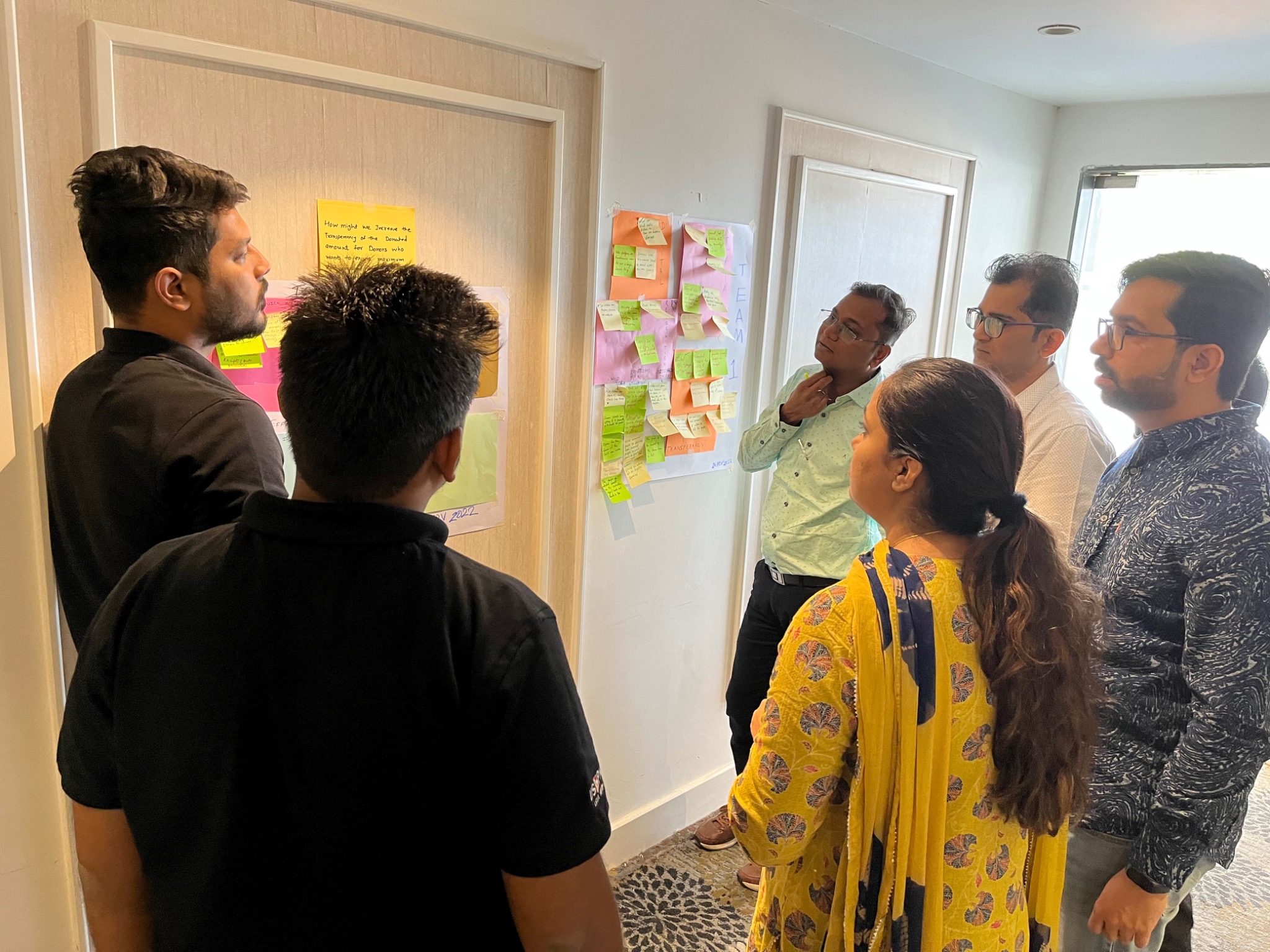
Many organisations say they are working in Agile. Teams run daily stand-ups. Work is organised into sprints. Backlogs are maintained, retrospectives are conducted and progress is tracked through dashboards.
Yet decisions may still take too long. Priorities keep changing. Teams remain dependent on multiple approvals. Customer feedback arrives late. Business and technology teams continue to work across organisational boundaries rather than as one team.
The organisation may be following Agile practices without becoming more adaptable.
Agile should not be measured by how consistently teams follow ceremonies. It should be judged by whether the organisation can understand changing needs, make better decisions, learn faster and deliver useful outcomes with greater confidence.
Agile is not simply a delivery methodology
Agile is often introduced as a new way to manage projects. Teams learn the terminology, adopt a framework and begin working in shorter cycles.
These changes can improve visibility and coordination. But they do not automatically change how the organisation thinks or makes decisions.
A team cannot respond quickly when every meaningful decision requires several layers of approval. A backlog cannot create focus when leaders continue adding priorities without making trade-offs. A retrospective cannot improve delivery when teams are unable to challenge established processes.
Agile Ways of Working require changes in leadership behaviour, team ownership and the organisational environment around delivery.
Begin with the business outcome
Agile initiatives often begin with the question: "Which Agile framework should we adopt?"
The priority may be reducing the time required to launch a product, improving the customer experience, simplifying an internal process, responding faster to regulatory change or enabling a GCC team to take greater end-to-end ownership.
Once the intended outcome is clear, Agile practices can be designed around the work rather than imposed as a standard operating model. This keeps the focus on progress and prevents the methodology from becoming the objective.
Move from activity to evidence
Traditional delivery environments can create a strong emphasis on completing planned activities. Agile introduces the opportunity to test progress through working outputs and evidence.
This does not mean moving quickly without direction. It means breaking a large ambition into smaller assumptions that can be tested.
- What must be true for this idea to work?
- What is the smallest useful outcome we can test?
- What evidence would increase our confidence?
- What have we learned that should change our next decision?
Instead of waiting until the end of a long programme to discover whether the solution works, teams develop evidence as the work progresses.
Cross-functional collaboration must be real
An Agile team may include people from business, technology, operations, risk, HR or customer experience. But bringing different functions into the same meeting does not automatically create collaboration.
People may still represent their departments rather than share ownership of the outcome. Real cross-functional working requires a common understanding of the problem, clear decision rights, shared success measures, access to customers and stakeholders, openness about constraints and collective ownership of results.
Human-centred problem solving can strengthen this process. When teams begin with the people experiencing the challenge, functional debates become easier to navigate. The conversation moves from defending departmental positions to understanding what will create value.
Leadership determines whether Agile can work
Agile transformation is often delegated to delivery teams. However, many of the conditions that limit agility sit outside those teams.
Leaders decide how priorities are set. They influence how resources are allocated, how risk is managed and how much freedom teams have to act.
Agile leadership includes providing clarity without prescribing every action, making choices between competing priorities, allowing teams to test assumptions, removing barriers across functions, responding to evidence and treating learning as progress rather than failure.
This can be uncomfortable. It asks leaders to give teams greater ownership while remaining accountable for direction and outcomes.
Agile and Design Thinking strengthen each other
Design Thinking and Agile are sometimes treated as separate approaches. Design Thinking helps teams understand people, frame the right problem and develop possible solutions. Agile helps them test, adapt and deliver those solutions through shorter learning cycles.
Design Thinking without an execution discipline can produce good ideas that struggle to move forward. Agile without strong problem understanding can help teams deliver the wrong solution more efficiently.
The value comes from connecting human insight, experimentation and adaptable execution.
Agile is particularly relevant for evolving GCCs
Many Global Capability Centres have built their reputation through reliable delivery, process discipline and functional expertise.
As GCCs take on greater enterprise responsibility, they are increasingly expected to influence priorities, shape solutions and lead work across organisational boundaries. Agile Ways of Working can support this shift, but only when they extend beyond technology delivery.
GCC teams need the confidence and capability to engage global stakeholders around shared outcomes, challenge unclear requirements, reframe business problems, test ideas using evidence, manage dependencies and influence decisions without relying on formal authority.
This is as much a leadership and organisational capability challenge as it is a delivery challenge.
Build Agile capability through real work
Agile capability is not built through terminology alone. People develop confidence when they apply the approach to meaningful work, receive coaching and reflect on what helped or hindered progress.
A practical capability journey can combine Agile foundations, live business priorities, cross-functional problem framing, short cycles of action and evidence, leadership coaching, reflection and reusable practices.
The objective is not to make every team follow exactly the same process. It is to develop a shared ability to create focus, respond to change and move important work forward.
The real test of agility
An organisation is becoming more Agile when teams can answer these questions clearly:
- What outcome are we working towards?
- Whose needs are we trying to address?
- What are we learning from the work?
- What decisions are slowing progress?
- What should we change based on the evidence?
- What is the next useful outcome we can deliver?
Agile ceremonies can support these conversations. They cannot replace them.
The real value of Agile lies in helping organisations turn priorities into focused action, learning and measurable progress. That requires methodology, but it also requires leadership, collaboration and the willingness to change how work gets done.