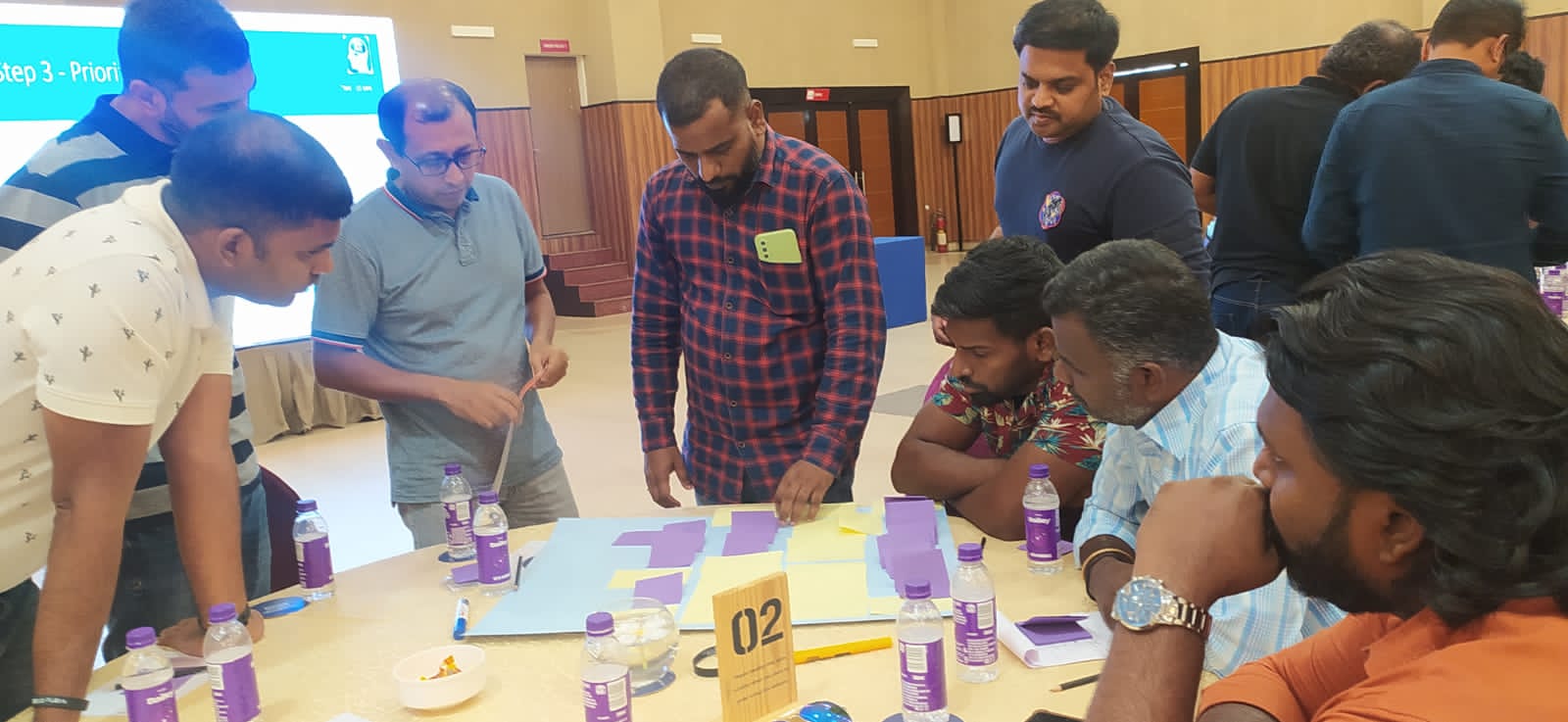
Many organisations want a stronger culture of innovation. They invest in workshops, idea challenges, innovation labs and communication campaigns. These efforts can create energy, but the energy often fades when people return to familiar targets, approval processes and ways of working.
The problem is not a shortage of interest. Culture does not change through a single event. It changes when new behaviours become normal, useful and repeatable.
A culture of innovation develops when people are encouraged to question assumptions, understand problems, explore alternatives, test ideas and learn from evidence - and when leaders and organisational systems support those behaviours.
Innovation culture is visible in everyday work
Culture is often described through values and statements. In practice, it is visible in what happens when a team faces uncertainty.
Do people ask questions or wait for direction? Do they explore the problem or rush to a familiar solution? Can they raise an uncomfortable insight? Are early tests encouraged, or is every idea expected to arrive fully formed? Does learning influence the next decision?
These everyday choices reveal whether innovation is part of the organisation's way of working or remains a separate initiative.
Innovation is rarely one big idea
The word innovation can create the impression that organisations need dramatic breakthroughs. Some opportunities do require bold moves. But much of organisational innovation begins with smaller improvements in how people understand a problem, make a decision or work across boundaries.
A useful question, a reframed challenge, a small experiment or a better conversation with a customer can change the direction of work. Repeated across teams, these actions build an organisation's ability to innovate.
Workshops create a starting point, not a culture
A well-designed workshop can give people shared language, practical methods and confidence to approach problems differently. It can also help a team make meaningful progress on a live priority.
But people return from the workshop to the organisation they left. If leaders continue to reward certainty, functions protect their own boundaries and approval systems discourage experimentation, the new methods will struggle to survive.
Culture changes when the behaviours introduced in a workshop continue through coaching, leadership reviews, team rituals and repeated application.
Design Thinking can provide the discipline
Design Thinking offers more than a set of workshop activities. Used well, it provides a disciplined way to work through uncertainty.
Teams begin by understanding the people affected, frame the right problem, explore alternatives, make ideas visible and test assumptions before committing significant resources.
These behaviours support an innovation culture because they replace opinion with inquiry, isolated expertise with collaboration and large untested commitments with evidence-based progress.
Four elements shape the organisation's Innovation DNA
People
People need curiosity, confidence and practical tools. They also need permission to challenge assumptions, contribute ideas and learn from incomplete information.
Process
Teams need a clear path from opportunity to action. Useful ideas should not disappear because ownership, evidence or the next decision is unclear.
Culture
The organisation must make it safe and worthwhile to collaborate, test and learn. What leaders reward and what systems permit will shape behaviour more strongly than a stated value.
Leadership
Leaders create the conditions. Their questions, decisions and allocation of attention signal whether innovation is expected, tolerated or quietly discouraged.
Small habits that make innovation repeatable
Start important discussions with the problem
Before reviewing a proposed solution, clarify who is affected, what is happening and why the issue matters.
Bring evidence into the room
Use customer insight, stakeholder observation, operational data and frontline experience to challenge internal assumptions.
Reframe before resolving
Ask whether the visible symptom is the real problem. A better frame can prevent teams from improving the wrong thing.
Make ideas visible early
Sketch, prototype or describe an idea before investing heavily. Visible ideas are easier to discuss and improve.
Test the riskiest assumption
Identify what must be true for an idea to work, then find a practical way to gather evidence.
End meetings with ownership
Agree who will act, what will be tested and when the team will review what it learned.
Share learning across teams
Make useful insights, failed assumptions and working approaches visible so others can build on them.
Capability grows through real business priorities
Innovation capability becomes credible when it helps teams address work that already matters. Live priorities create relevance, accountability and evidence.
People learn more deeply when they use the methods to improve a customer experience, redesign a process, explore an AI opportunity, develop a new proposition or solve a cross-functional challenge.
This is why capability building should combine learning, application, coaching and leadership involvement rather than rely only on classroom instruction.
Measures influence behaviour
Organisations often measure outputs such as the number of ideas, workshops or participants. These can indicate activity, but they do not show whether innovation capability is becoming stronger.
More useful measures include whether teams are framing clearer problems, testing assumptions earlier, moving promising ideas forward, making faster evidence-based decisions and reusing the methods without external prompting.
What an organisation measures tells people what it values.
Innovation cannot depend on a few enthusiasts
Innovation often begins with committed individuals, but it cannot remain dependent on them. When expertise sits with a small central team, other functions may treat innovation as someone else's responsibility.
A stronger model builds distributed capability. Leaders, managers and cross-functional teams learn how to apply the behaviours within their own work, while specialist support helps them with more complex challenges.
This makes innovation part of the operating system rather than an occasional service.
The real test of an innovation culture
The test is not whether employees can name an innovation framework.
The test is whether the organisation responds differently when the answer is unclear.
Do teams seek insight before deciding? Can they collaborate across boundaries? Do leaders ask for evidence? Are ideas tested before scaling? Is learning carried into the next piece of work?
These are practical signs that innovation is becoming part of the culture.
From occasional innovation to an organisational habit
A culture of innovation is not built through one large programme. It develops through small behaviours practised consistently, supported by leaders and connected to real work.
When people learn to understand before solving, reframe before resolving, test before scaling and share what they learn, innovation becomes less dependent on exceptional moments.
It becomes a repeatable organisational habit.