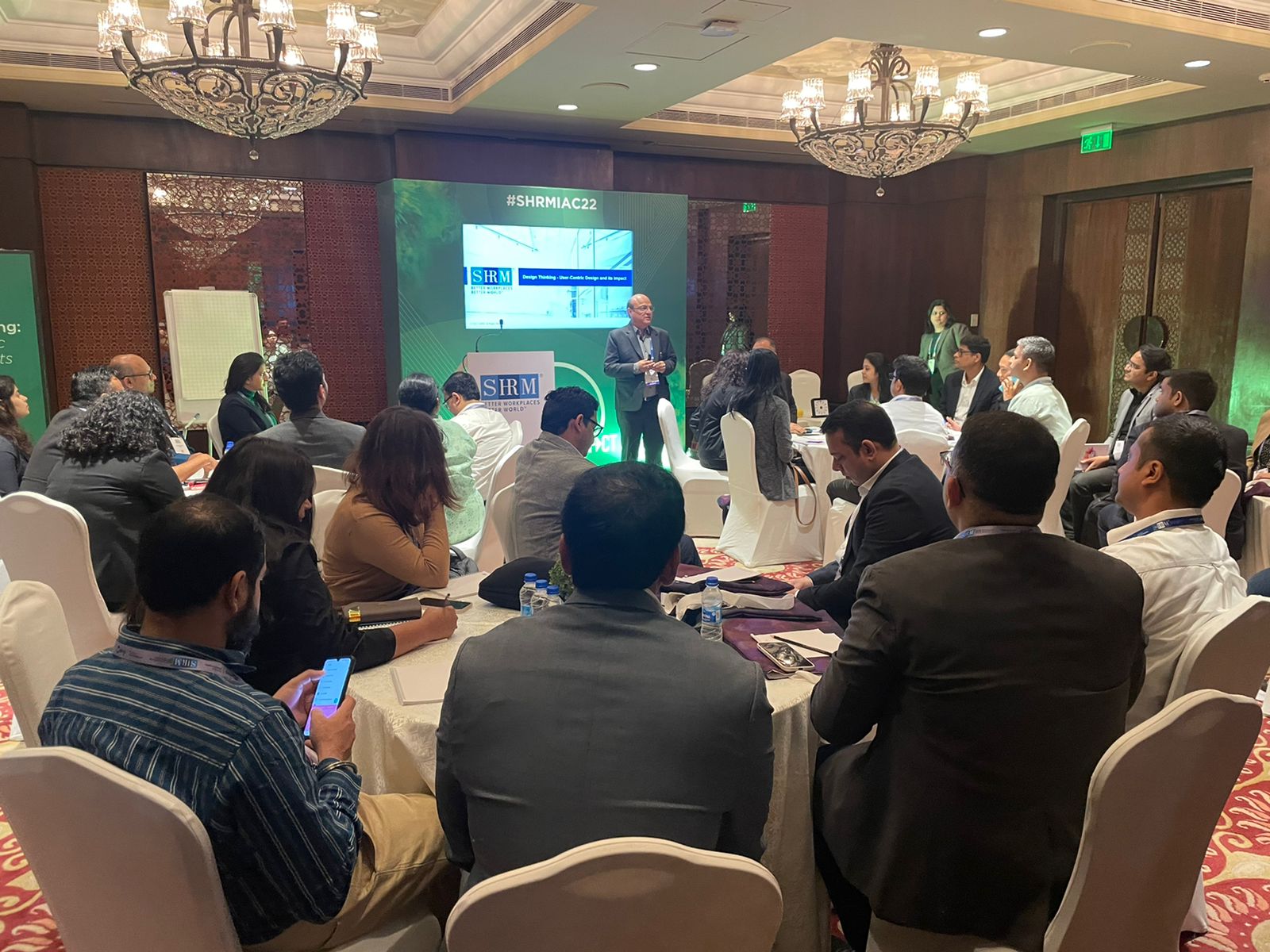
Corporate Design Thinking is not one standard workshop. The right format depends on whether the organisation needs shared awareness, progress on a defined challenge or a repeatable capability that teams can use after the facilitator leaves.
Five common programme formats
Leadership immersion - 2 to 4 hours
Useful for introducing the approach, aligning leaders around a priority and demonstrating how human-centred problem framing changes a discussion. It can create shared language, but it is not enough for deep research or validation.
Focused one-day workshop
Best for a tightly scoped challenge with evidence already available. A team may understand stakeholders, reframe the issue and create initial concepts. Buyers should expect direction and next questions, not a finished solution.
Two-day applied workshop
Allows more time for synthesis, ideation, concept development and early prototyping. It works well when a cross-functional team needs to move from a broad priority to a smaller set of testable options.
Multi-session Design Thinking lab
Sessions are separated by periods of stakeholder research, testing and refinement. This format produces stronger evidence because teams can learn between workshops rather than trying to complete every stage in the room.
Six to twelve-week capability journey
Combines workshops, coaching, live application and sponsor reviews. It is appropriate when the organisation wants teams to advance important initiatives and also build a reusable way of working.
Outputs and outcomes are not the same
Outputs are visible artefacts: empathy maps, journey maps, challenge statements, ideas, prototypes and action plans. Outcomes are changes in understanding, decisions and behaviour. A good programme uses the outputs to produce outcomes such as:
- A shared view of the customer, employee or stakeholder problem
- A challenge framed at the right level
- Fewer assumptions driving important decisions
- A prioritised set of concepts worth testing
- Evidence that strengthens or challenges a proposed direction
- Clear ownership and a practical next decision
- Greater confidence in applying the approach to future work
What happens before a well-run workshop
The provider should speak with the sponsor, understand the business context and clarify the intended outcome. Live challenges may need to be screened and narrowed. Existing research, operational data and stakeholder perspectives should be gathered. The participant group should include the functions needed to understand and act on the problem.
What buyers should expect during the programme
Participants should do more than listen. They should examine evidence, make assumptions visible, work across perspectives and create something that can be discussed or tested. The facilitator should maintain pace without forcing the team through tools that do not serve the challenge.
Some productive discomfort is normal. Reframing can expose that the original brief was too broad, too solution-led or based on an internal view. That is useful progress, not a failure of the agenda.
What should happen afterwards
A short workshop should end with owners, actions and unanswered questions. Longer programmes should include testing, coaching and decision points. Sponsors need a clear way to review evidence and decide whether an idea should advance, change or stop.
Where corporate Design Thinking can be applied
The approach can support customer experience, employee engagement and HR processes, process design and improvement, product and service development, innovation culture and GCC enterprise influence. The tools may be similar, but the evidence, participants and measures of progress will differ.
Evidence buyers can reasonably request
Look for a combination of relevant case studies, facilitator experience and cohort feedback. Innovation Spark Asia's anonymised corporate cohorts in the Philippines and Dubai have reported strong relevance, engagement and facilitator ratings. The more important test is whether the proposed design fits your own business priority.
Choosing the format
- Choose an immersion when leaders need a common starting point.
- Choose a focused workshop when the challenge is bounded and the immediate need is clarity or concepts.
- Choose a lab when the work requires stakeholder research and testing between sessions.
- Choose a capability journey when teams need to advance live initiatives and develop repeatable habits.
Innovation Spark Asia designs corporate Design Thinking programmes for enterprise and GCC teams in India around the business context, participants and intended decisions. The work is led by Ravi Kant and can combine facilitation, coaching and consulting.