Organisations invest considerable time and money in employee engagement. They conduct surveys, launch recognition programmes, organise town halls, introduce wellness initiatives and create communication campaigns. These activities may be useful, but they do not always address the everyday experiences that shape how employees feel about the organisation.
An employee may enjoy an engagement event and still struggle with an unclear onboarding process, fragmented HR systems, delayed approvals, inconsistent manager support or difficulty finding the information needed to do the job.
This is why HR transformation should not begin by asking, "What engagement activity should we introduce?"
A more useful starting point is, "What experience are employees having, and what is making that experience harder than it needs to be?"
Engagement is an outcome, not a standalone activity
Employee engagement is important, but it cannot be designed independently of the conditions in which people work.
People are more likely to feel engaged when they understand what is expected, can access the information and support they need, feel heard, experience fairness, see meaning in their work and can make progress without unnecessary friction.
Engagement develops through the accumulated experience of working in the organisation. A recognition programme cannot compensate for a frustrating performance process. A town hall cannot resolve unclear career pathways. A wellness initiative cannot remove the daily effort caused by poorly connected systems and fragmented ownership.
Employees experience the organisation as a journey
HR processes are usually organised by function. Recruitment manages hiring. Learning manages development. Compensation manages rewards. HR operations manages policies and transactions. Business HR supports managers and employees.
Employees do not experience these functions separately. They experience a connected journey - discovering the organisation, applying, joining, understanding responsibilities, working with a manager, learning, receiving feedback, moving roles, resolving concerns and eventually leaving.
A breakdown at any important point can affect the employee's perception of the entire organisation. Design Thinking helps HR teams view these moments through the employee's experience rather than only through the organisation's process structure.
Start by understanding the lived experience
Employee surveys provide valuable information, but they rarely explain the complete experience behind a score.
A low rating for career development may reflect unclear career paths, weak manager conversations, poor visibility of internal opportunities, inconsistent selection processes or learning that is disconnected from real roles.
The score identifies an area of concern. It does not automatically identify the problem that needs to be solved.
HR teams need to combine quantitative information with employee conversations, observation, process data and the experience of managers and frontline HR teams. The purpose is not research for its own sake. It is to understand what is happening well enough to make a better decision.
Design Thinking brings the employee into HR process design
Many HR processes are designed around policy, compliance, system capability and administrative efficiency. These considerations are necessary, but they are not sufficient.
A process can be technically correct and still be difficult for employees to understand or use.
Design Thinking introduces another perspective: Who is experiencing this process? What are they trying to accomplish? What information do they have? Where do they become uncertain or frustrated? Which moments have the greatest effect on trust? What would a better experience enable?
These questions help HR teams connect process design with human needs and organisational outcomes.
Employee experience is not about making everything easy
A human-centred HR process does not mean removing every control or giving every employee what they request. HR must balance employee needs with business priorities, fairness, compliance, cost and operational feasibility.
The objective is not to make every experience pleasant. It is to make important experiences clear, purposeful, consistent and respectful.
A performance conversation may still be challenging, but employees should understand the process, receive useful feedback and know what happens next. A promotion decision may not produce the outcome someone wanted, but the criteria and communication should be credible and transparent.
Five steps for redesigning an HR experience
1. Select an important employee moment
Begin with a specific experience such as onboarding, internal mobility, performance management, learning, employee listening, recognition or separation.
2. Understand employees and stakeholders
Speak with employees who have recently experienced the process. Include managers, HR operations, technology teams and others involved in delivering it.
3. Map the current experience
Identify the key steps, interactions, information needs, pain points and moments that matter. Make visible where ownership changes between teams or systems.
4. Reframe the challenge
Move from a broad complaint to a focused design question. Instead of asking how to improve onboarding, ask how new employees can understand their role, build the right relationships and become productive with confidence during their first 60 days.
5. Prototype and test the improved experience
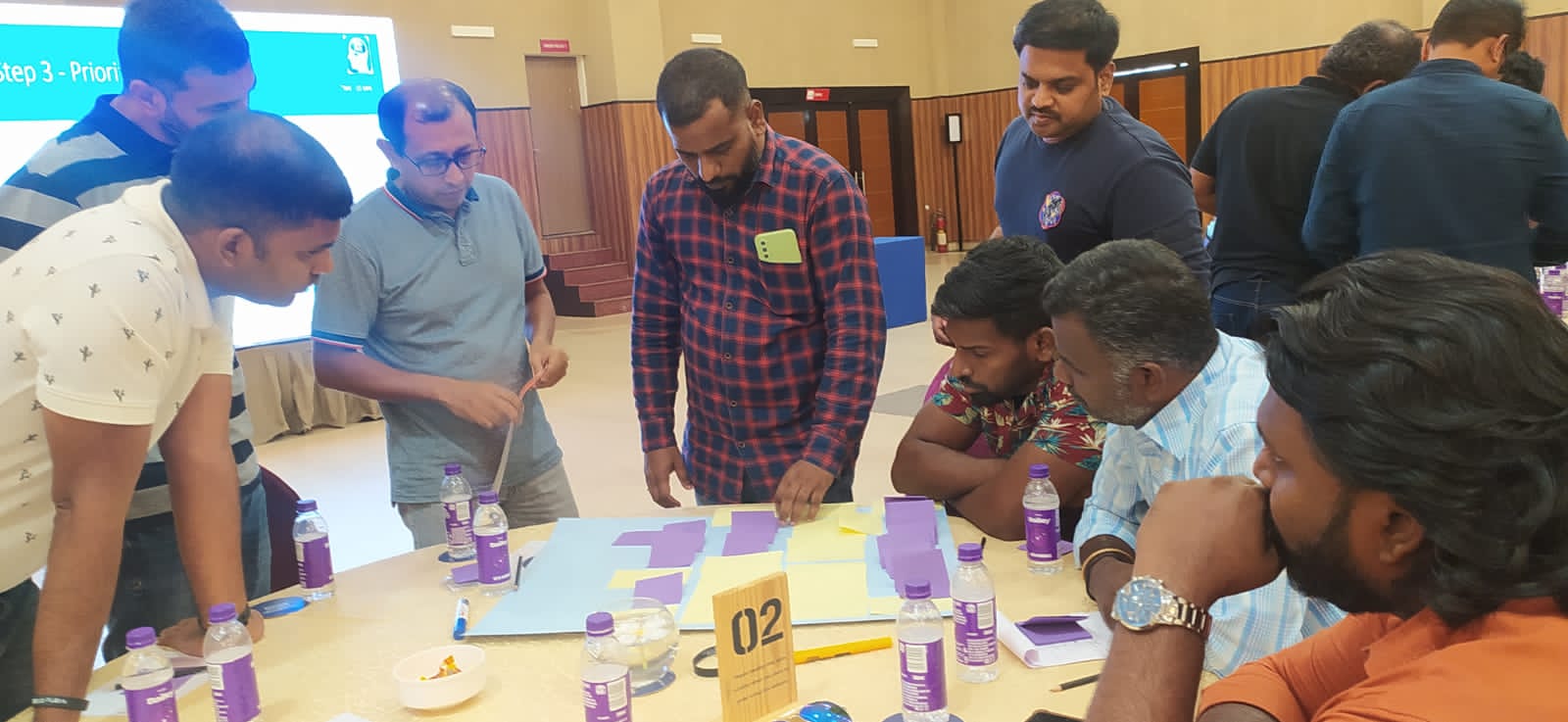
Test important parts through revised communication, a conversation guide, a simple workflow, a manager toolkit, a prototype screen or a pilot with one employee group.
HR teams should design with employees, not only for them
HR professionals bring valuable expertise in policy, people practices and organisational systems. But expertise can also create assumptions about what employees need.
Involving employees does not mean transferring design responsibility to them. It means using their experience as evidence. Employees can reveal unclear information, unnecessary effort, moments where personal support matters and differences between the intended and actual process.
Managers should also be involved because many employee experiences are delivered through them. A well-designed process will not work if managers do not understand it, believe in it or have the capability to apply it.
Employee experience and customer experience are connected
Employees create the customer experience. When they face unclear processes, disconnected information or slow internal decisions, these conditions often affect customers as well.
A customer request may be delayed because an employee cannot obtain approval. A frontline colleague may struggle to resolve a problem because policies are difficult to interpret. A manager may spend time navigating administration instead of supporting the team.
Improving employee experience can therefore strengthen productivity, collaboration, manager effectiveness, customer experience and organisational trust.
HR transformation cannot depend only on technology
Technology can simplify transactions, improve access and provide useful data. But digitising a poorly understood process may only make the existing problem operate faster.
Before implementing a new platform, HR teams should understand which employee problem is being solved, what creates the greatest friction, what can be simplified before automation and how success will be experienced and measured.
Technology should enable a better experience, not define it.
Leadership behaviour shapes employee experience
Employees experience organisational culture through leaders and managers. A well-designed policy can be weakened by inconsistent leadership behaviour. At the same time, a capable manager can reduce the effect of an imperfect process.
Leaders influence employee experience through what they communicate, how they make decisions, whether they listen and how they respond when employees raise concerns.
Employee experience cannot remain an HR-only responsibility. HR can provide insight, frameworks and support, but leaders and managers must take ownership of the experiences they create.
Measure whether the experience has improved
HR initiatives are often measured through completion rates, participation and satisfaction. These indicators are useful, but they do not always demonstrate improvement.
For onboarding, measures might include time taken to obtain access, clarity of role, manager readiness, speed of relationship building, time to productive contribution and early employee confidence.
For internal mobility, measures might include visibility of opportunities, application effort, quality of manager conversations, perceived fairness, movement across functions and retention of internal talent.
The right measures connect employee experience with organisational outcomes.
From isolated HR initiatives to repeatable capability
One employee-experience project can improve an important process. Greater value comes when HR teams build the capability to apply human-centred methods repeatedly.
This requires shared employee-experience principles, practical research and problem-framing skills, cross-functional participation, manager involvement, early prototyping, coaching on live HR priorities and leadership reviews based on evidence.
The aim is not to turn every HR professional into a designer. It is to help HR teams make better decisions by understanding employees more deeply, framing problems more clearly and testing improvements before scaling them.
Begin with the experience that matters
Employee engagement will not improve because the organisation adds more engagement activities.
It improves when employees experience greater clarity, trust, support, fairness and the ability to make meaningful progress.
Design Thinking helps HR teams understand where those experiences are being strengthened or weakened. It provides a practical way to connect employee insight with process design, manager behaviour and organisational priorities.
The most useful starting point is not another initiative. It is one important employee experience that deserves to work better.